




Virtual Tenis


screenshots
5 (5 available)
Random video
1 available
Gameplay
computer emuzone review

Published on2020/06/14
The history of DDM (Digital Dreams Multimedia) begins shortly after the decline of the great Spanish companies of the Golden Age, and follows a trajectory parallel to that of Dinamic's successor, who was experiencing a new era of success with Hobby. Press.
Composed, at least in principle, by former members of Diabolic, little by little they made a foothold in this new world of games sold in kiosks, in magazine format to benefit from the reduced VAT that was applied to them at the time, and which provided a generous advantage over traditional selling.
It was a curious tour, under the auspices of Tower Communications in its early days, this publisher, among others, of PC (Top) Player, a magazine that praised the company's creations at first for later (we do not know the problems that arose) stoke them without any blush. DDM, Abeto, Tower ... A morass of brands and companies that made it clear, once again, that economic and creative interests almost never went hand in hand.
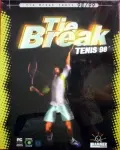
Famous are their PC Liga or DDM Soccer sagas, but they also had time for other spaces, and tennis was one of them. And they were not limited to Virtual Tennis (another name similar to a saga, in this case SEGA and its "Virtua"), but a few years later they tried it again with Tie Break Tenis 98, or 'Tie Break Tennis' (those name duplications were certainly not uncommon).
The game is fine for the time it was conceived, with a flatter perspective than it had been until now, perhaps because it has been in fashion for a while, since the appearance of the Super Nintendo and its 'Super Soccer' (not confused with Imagine 80s for 8-bit computers).
It does not have the real names of the players, but that will not be a problem for you to recognize them; thus, vibrant matches will be produced featuring Boris Bockur, Peter Sandprix and Stefan Edbord.
The graphics are eye-catching and the sound has the essential voice digitizations of the time, in addition to music that does not stop playing during games.
If you like tennis you will have a good time, despite the camera moving a bit too much for what would be desirable.
Composed, at least in principle, by former members of Diabolic, little by little they made a foothold in this new world of games sold in kiosks, in magazine format to benefit from the reduced VAT that was applied to them at the time, and which provided a generous advantage over traditional selling.
It was a curious tour, under the auspices of Tower Communications in its early days, this publisher, among others, of PC (Top) Player, a magazine that praised the company's creations at first for later (we do not know the problems that arose) stoke them without any blush. DDM, Abeto, Tower ... A morass of brands and companies that made it clear, once again, that economic and creative interests almost never went hand in hand.
Famous are their PC Liga or DDM Soccer sagas, but they also had time for other spaces, and tennis was one of them. And they were not limited to Virtual Tennis (another name similar to a saga, in this case SEGA and its "Virtua"), but a few years later they tried it again with Tie Break Tenis 98, or 'Tie Break Tennis' (those name duplications were certainly not uncommon).
The game is fine for the time it was conceived, with a flatter perspective than it had been until now, perhaps because it has been in fashion for a while, since the appearance of the Super Nintendo and its 'Super Soccer' (not confused with Imagine 80s for 8-bit computers).
It does not have the real names of the players, but that will not be a problem for you to recognize them; thus, vibrant matches will be produced featuring Boris Bockur, Peter Sandprix and Stefan Edbord.
The graphics are eye-catching and the sound has the essential voice digitizations of the time, in addition to music that does not stop playing during games.
If you like tennis you will have a good time, despite the camera moving a bit too much for what would be desirable.
related
If you like it...







developing team
Info
We do not have information about the authors of this game. If you know them, paste the credits here.
comment
AFFILIATES

thanks
There are no registered contributions for this card yet.


