



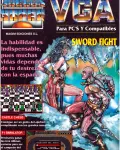
Sword Fight


screenshots
3 (3 available)
Random video
1 available
Walkthrough
computer emuzone review

Published on2023/10/19 at 12:24
The year was 1993, a time when Atari ST and Amiga were languishing in the face of the growing popularity of PCs, which little by little had been matching them in graphics and sound until surpassing them with the standardization of 3D games. And it was logical, since a PC was constantly evolving, while the Falcon and A1200 were desperate attempts to hold on to the market of companies in crisis that could not even advertise their creations.
There were also the consoles, with a gaming history more similar to that of computers with the Motorola 68000. And if they had anything in common it was the coin-op conversions (later we would find out that in the US they also made them for PC).
What's the point? Well, we all have games like 'Golden Axe' in mind, and this one drew from it (although not as obviously as in Sword Fight II) and from others like 'Barbarian' or 'Crime Wave', a game that stood out for its digitized graphics, novel in its time.
And that is what this game offers us, a classic beat 'em up that is quite limited, with VGA digitized graphics, sound through the speaker and still scenarios that we access after defeating all the enemies that appear in each round.
The truth is that it becomes monotonous and repetitive after a few minutes of playing, but we could ask for little more from a game created by a single person and marketed in newsstands by Ediciones Mago (formerly Ediciones Manali).
Its second part, created a year later, represented a quantitative leap that we will tell you about in its file.
There were also the consoles, with a gaming history more similar to that of computers with the Motorola 68000. And if they had anything in common it was the coin-op conversions (later we would find out that in the US they also made them for PC).
What's the point? Well, we all have games like 'Golden Axe' in mind, and this one drew from it (although not as obviously as in Sword Fight II) and from others like 'Barbarian' or 'Crime Wave', a game that stood out for its digitized graphics, novel in its time.
And that is what this game offers us, a classic beat 'em up that is quite limited, with VGA digitized graphics, sound through the speaker and still scenarios that we access after defeating all the enemies that appear in each round.
The truth is that it becomes monotonous and repetitive after a few minutes of playing, but we could ask for little more from a game created by a single person and marketed in newsstands by Ediciones Mago (formerly Ediciones Manali).
Its second part, created a year later, represented a quantitative leap that we will tell you about in its file.
related
IF YOU LIKE IT...


developing team
Autor: Carlos Esteve Cremades
comment
AFFILIATES

thanks
MS-DOS Club, Antonio Ortiz
cover & manual


