EDITORIAL
Analysis
karnevi2019/03/20
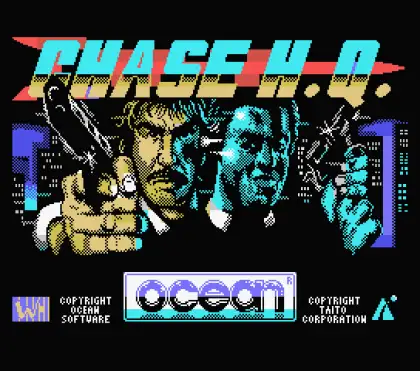
A new direct conversion from Spectrum, in this case conversion in turn of a Taito coin-op, made its appearance for MSX. It is seen that both Erbe and Dro Soft saw a great reef in the licenses, and it should not be unprofitable if they insisted on the process over and over again.
From this game I only got to know the demo that was published with Microhobby magazine, that if I remember too badly it allowed you to play the first stage. The fact of playing these demos usually had a disincentive effect on me, I do not know what would happen to you, and rare was the time I had just bought the game. I guess it was a time when given the amount of games that were published, unless the program in question was very special, we soon got bored and went to another.
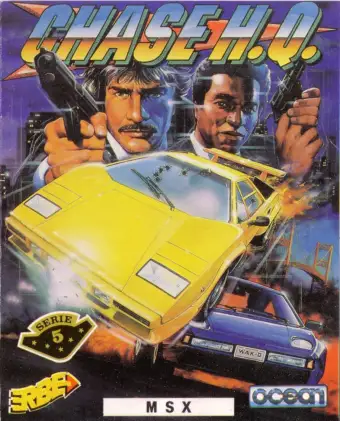
It was published at the time of the 5 star series of Erbe, with prices already in the 1200 Pts. And large plastic boxes like the traditional ones of the United Kingdom, or as the best releases of Dro Soft ... It was a relatively short time, that gave way to the cardboard boxes, with which they cohabited a time.
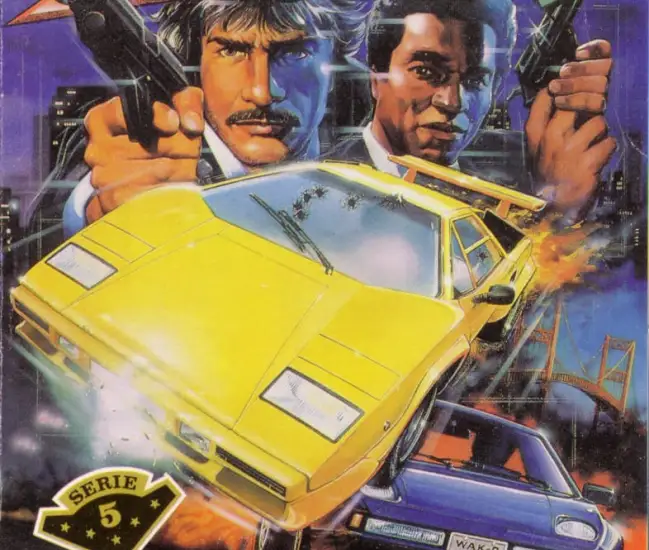
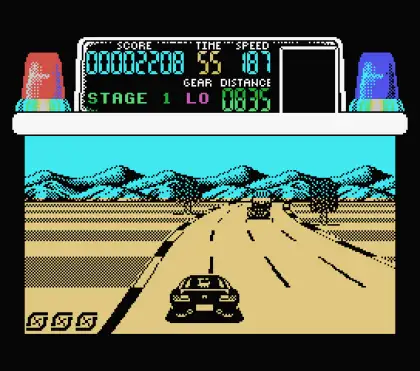
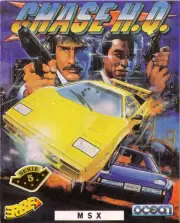
I remember that, looking at the cover, I expected that the protagonist car was yellow, and in Spectrum (or MSX) the truth is that you did not know, because the screen of the first phase was yellow as well. I took the surprise when I saw the Arcade version, and the other conversions with color, and I realized that our car was black.
The game is very entertaining, and for Spectrum the graphics are good. In MSX, speed is lost and the capacity of the computer is not used, but it is allowed to play well. There is, however, a version optimized by Martos that speeds up the speed, so that it has the same version as the one it starts from, but I have not found it. You have to thank the people who care about these things for their work ... And maybe one day, even though it would be a lot more work, they will be encouraged to revamp the graphics of some of these direct conversions.














Latest comments
El vídeo al que enlazas lo he subido yo a YouTube y es de la versión del WAV que le facilité a Martos hace décadas de mi cinta original del juego para MSX. La versión de Martos es una adaptación a disquete y funciona a 60Hz en MSX2 y superiores y corre a 5,37 MHz en ordenadores MSX2+ de Panasonic (y no a los 3,58 MHz de los Z80A estándar presentes en todos los MSX). También se puede ejecutar en MSX TurboR en modo R800 pero el juego va tan rápido que es injugable. La versión de MSX es un port directo de la de ZX Spectrum y, siendo esta última versión la mejor de 8 bits junto con la de Amstrad, el juego es más que decente. Su principal inconveniente es que, jugado en un MSX europeo a 50Hz y 3,58Mhz, el juego no tiene la rapidez/fluidez del de ZX Spectrum. La conversión de MSX también pierde puntos por la barra lateral y las caras de los policías y del delincuente al final de las fases (que no aparecen en color como en la versión de ZX Spectrum). Un fallo grave que tiene la versión original de MSX es que la última fase (la 6a) con el final del juego no carga al no estar debidamente programada (muy probablemente inacabada por prisas en el desarrollo del port de ZX Spectrum). FX corrigió en el 2019 esta última fase (msxfx.blogspot.com/2019/06/nuevo-parcheo-chase-hq.html). Tanto el arcade original como las versiones de Amstrad y ZX Spectrum son de lo mejorcito que se hizo (simulación automovilística con vista 3D) en aquella época para 8 y 16 bits. El arcade rivalizaba (e incluso superaba) al Out Run de Sega y la versión de ZX Spectrum fue considerada por los lectores de la revista Your Sinclair (revista británica dedicada al ZX Spectrum equivalente a la MicroHobby española) como el mejor juego jamás aparecido para ZX Spectrum (casi nada). La versión de Commodore 64 es la peor de todas, es un port desastroso de la de ZX Spectrum (algo sorprendente tratándose de un "superhit" de Ocean). La versión de Amstrad es muy buena y en color, en jugabilidad es un calco de la de ZX Spectrum, pero no sabría si quedarme con esta última pese a que sea monocroma por el modo 0 de los Amstrad CPC, por el cual los gráficos se ven demasiado pixelados (a resolución 160x200). La versiones de 16 bits (Commodore Amiga y Atari ST) son bastante peores que las de 8 bits (el control del coche es mucho peor que en las versiones de 8 bits y los efectos 3D de la carretera son también perores: cambios de rasante, bifurcaciones, ampliación de carriles, etc.). Las veriones de 16 bits superan, eso sí, a la de Commodores 64, que es la peor versión de todas y con mucha diferencia. Añado que Chase H.Q. fue el último juego de Ocean que apareció para MSX (año 1990), ningún otro juego posterior de Ocean apareció versionado para el sistema japonés. Un saludo.
2023-08-26 00:26:52