




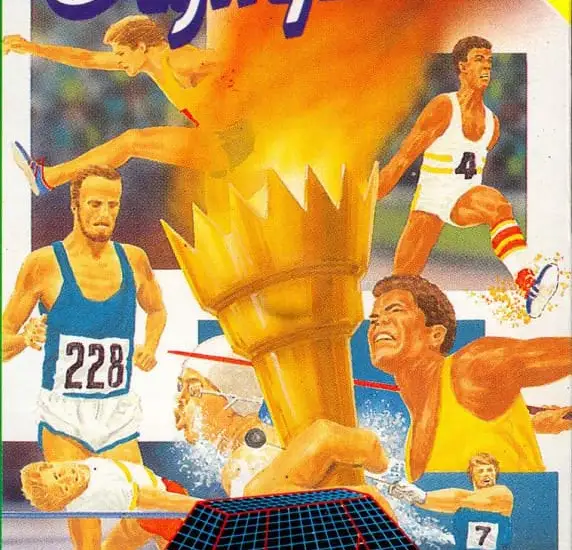
Video Olimpic
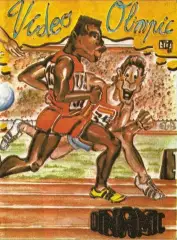

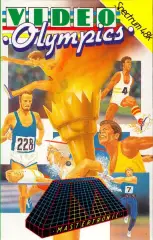


screenshots
2 (2 available)
Random video
1 available
Vídeo
computer emuzone review

Published on2002/08/28
It was 1984 when Dinamic began to make its mark in the burgeoning home video game market. Armed, as many of you know, with a Spectrum 48k (the famous "rubber band"), a black and white television, and a cassette player, Víctor and Nacho Ruiz (aided by their brothers Pablo and Gabriel) began, in their living room, what would become a meteoric career, punctuated only by a couple of setbacks over its 18 years of existence (at the time of writing, they are the public face of FX Interactive).
From there came programs like Artist and legendary games such as Yenght, Saimazoom, and Mapsnatch, which they themselves packaged and sold by mail. This was the case with the game we're discussing.
THE GAME
While the period we're discussing can be considered the most legendary for the Madrid-based company, it's also true that the quality of its games can't be compared to those they would produce three or four years later, during the so-called Golden Age of Spanish Software.
'Video Olimpic' (or 'Video Olympics', as it was called in the UK) is a rather blatant copy of Konami's hugely popular 'Track & Field', which was a huge hit in arcades worldwide at the time. The events aren't in the same order in each game (or so I seem to recall), but they're essentially the same: 100m, long jump, javelin throw, hammer throw, 110m hurdles, and... I still need to find out if it also includes pole vault and high jump, because in the test game I played to complete the review, I didn't get past 110m (ugh!). Furthermore, another detail that clearly reveals Nacho Ruiz's inspiration is that he no longer just uses Konami's traditional method of tilt angles and such, but, for example, the hammer throw has an identical setup: you press the button to start, let it build speed on its own, and when it's in the position you think is correct, you press the release button until you reach the appropriate angle for a perfect throw.
Leaving aside these minor details (which they undoubtedly were at the time), it must be said that the game's mechanics are very simple, so you only need to use the right cursor and the spacebar to control the main athlete, making it quite easy to get the hang of the game.
COMMENTARY
If this game had appeared during the golden age (1986-1989), it would have been savaged and criticized relentlessly. But the truth is, it wasn't, and for a game released in the early days of Spectrum gaming, it's not bad at all. It's very simple, yes; It doesn't have sound effects—just the intro music—either. But it has an impressive charm. In fact, if my memory serves me right, it reached number 1 in the UK sales charts, which speaks volumes about its quality for the time, although a few months later it would be far surpassed in quality by titles like 'Hypersports' (Imagine, by Konami) or 'Daley Thompson's Decathlon' (Ocean).
So, as a final comment, I'm going to recommend, as I almost always do, that you download it and see for yourselves the beginnings of Spanish developers in the exciting world of sports games.
From there came programs like Artist and legendary games such as Yenght, Saimazoom, and Mapsnatch, which they themselves packaged and sold by mail. This was the case with the game we're discussing.
THE GAME
While the period we're discussing can be considered the most legendary for the Madrid-based company, it's also true that the quality of its games can't be compared to those they would produce three or four years later, during the so-called Golden Age of Spanish Software.
'Video Olimpic' (or 'Video Olympics', as it was called in the UK) is a rather blatant copy of Konami's hugely popular 'Track & Field', which was a huge hit in arcades worldwide at the time. The events aren't in the same order in each game (or so I seem to recall), but they're essentially the same: 100m, long jump, javelin throw, hammer throw, 110m hurdles, and... I still need to find out if it also includes pole vault and high jump, because in the test game I played to complete the review, I didn't get past 110m (ugh!). Furthermore, another detail that clearly reveals Nacho Ruiz's inspiration is that he no longer just uses Konami's traditional method of tilt angles and such, but, for example, the hammer throw has an identical setup: you press the button to start, let it build speed on its own, and when it's in the position you think is correct, you press the release button until you reach the appropriate angle for a perfect throw.
Leaving aside these minor details (which they undoubtedly were at the time), it must be said that the game's mechanics are very simple, so you only need to use the right cursor and the spacebar to control the main athlete, making it quite easy to get the hang of the game.
COMMENTARY
If this game had appeared during the golden age (1986-1989), it would have been savaged and criticized relentlessly. But the truth is, it wasn't, and for a game released in the early days of Spectrum gaming, it's not bad at all. It's very simple, yes; It doesn't have sound effects—just the intro music—either. But it has an impressive charm. In fact, if my memory serves me right, it reached number 1 in the UK sales charts, which speaks volumes about its quality for the time, although a few months later it would be far surpassed in quality by titles like 'Hypersports' (Imagine, by Konami) or 'Daley Thompson's Decathlon' (Ocean).
So, as a final comment, I'm going to recommend, as I almost always do, that you download it and see for yourselves the beginnings of Spanish developers in the exciting world of sports games.
related
COMPILATIONS

If you like it...




AFFILIATES

thanks


Pantalla de carga: Santiago Morga Bachiller, Ignacio Ruiz Tejedor (Snatcho)
Música: Luis Rodríguez Soler, Santiago Morga Bachiller